
Stick vs Zombies: Platformer
Aurecas GamesAction
4.42.14K Reviews
- Version
- 1.6.6
- Installs
- 50.00M
- Age Rating
- Everyone
Screenshots
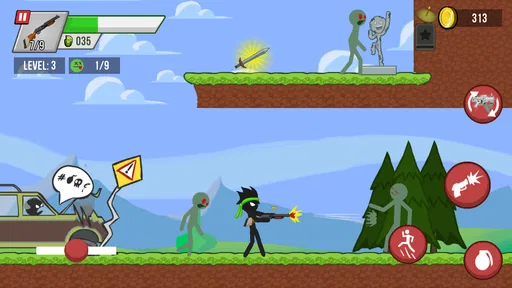
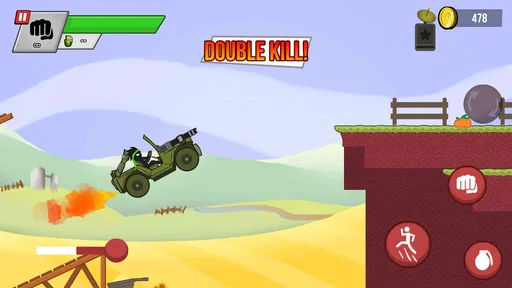
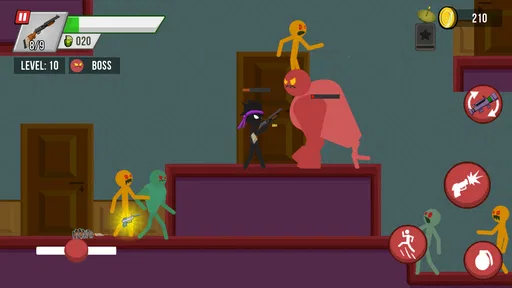
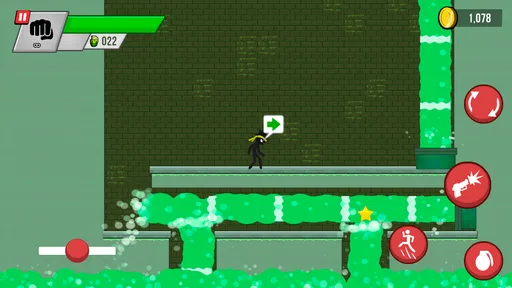
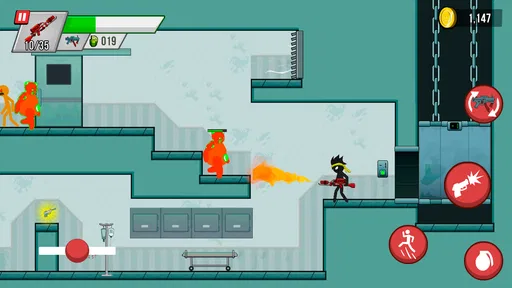
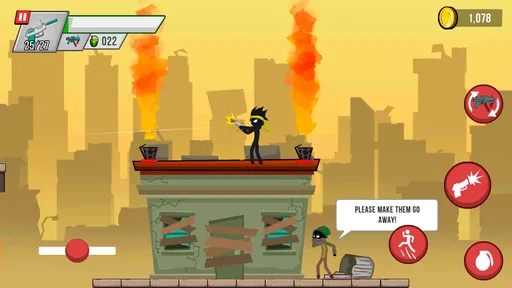
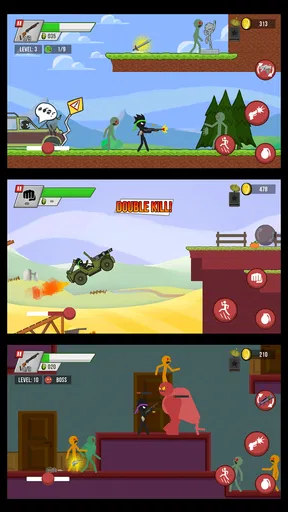
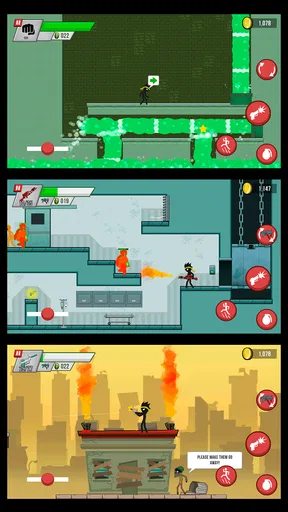
Our Review of Stick vs Zombies: Platformer
 Analysis by Appyee
I spent time with Stick vs Zombies: Platformer as a mobile action game, paying particular attention to how easy it is to read, control, and enjoy in different everyday situations. Its basic idea is immediately clear: guide a stick character through dangerous platforming sections, fight zombies, use weapons, and connect attacks into combos. That directness matters on a phone, where I usually want to understand the objective within a few seconds rather than study a complicated interface.
Developed by Aurecas Games, the game is free to start and aimed at Everyone. It has been available since August 31, 2018, and its current version is 1.6.6, with support beginning at Android 7.0. The large audience is easy to understand: the game combines familiar side-scrolling action with short, energetic encounters, while its offline focus makes it practical when I do not want to depend on a connection.
My overall impression is positive, but not unqualified. The simple stick-art presentation keeps the screen from feeling visually crowded, and the action has enough variety to make repeated sessions worthwhile. At the same time, fast combat can demand quick reactions, and the small-screen format is not equally comfortable for every player. I would recommend it most to people who enjoy compact action challenges and do not mind learning through repetition.
How clearly the game communicates what is happening
I find the game easiest to follow when I focus on the character’s immediate surroundings: nearby enemies, the next platform, and the opening for an attack. This section looks at how the clean stick-art presentation helps me make those decisions, while also noting when fast overlapping action can make a simple screen feel busy. That distinction matters for players who rely on quick visual cues.
Readable presentation without a heavy interface
The visual style is one of the game’s most useful practical choices. Stick characters and uncluttered environments are easier to identify than highly detailed figures squeezed onto a phone display. I can generally tell where the player character is, where enemies are approaching, and which parts of the level are meant to be traversed. That simplicity also helps when I play outside or in a room with distracting surroundings.
This does not mean every moment is effortless to follow. Once several enemies, weapons, movement, and platforming hazards overlap, the screen becomes more demanding. The game’s speed can turn a visually simple scene into a busy one. I found that the clearest way to play was to watch the immediate space around the character rather than stare at every object on the screen. That habit reduces the chance of reacting too late.
The game’s action-platformer structure is easier to understand than a role-playing game filled with menus, equipment pages, and long explanations. I can pick it up for a short session and remember the central loop: move, avoid danger, attack, and use the environment and available tools to continue. For a player who prefers straightforward navigation, this is a genuine strength.
Learning the controls through repetition
My first sessions were less about winning consistently and more about building a rhythm. The game asks me to coordinate movement with attacks, jumps, and timing. That learning curve is not unusual for an action platformer, but it is important when considering who will find the experience comfortable. The controls become more natural after repeated attempts, yet a new player may initially feel that the character responds faster than their fingers do.
I recommend beginning with short sessions instead of trying to push through a difficult stretch while frustrated. A few minutes of focused practice helped me recognize enemy approaches and understand when I was rushing. This is also useful for players who find lengthy, uninterrupted play tiring: the game works well as a sequence of small attempts rather than something that requires a long commitment every time.
The offline design is especially convenient for navigation in the broad sense. I can play during travel, in a waiting room, or somewhere with unreliable service without treating a connection problem as another obstacle. That makes it more dependable than action games whose main experience is tied to online matches or constant network access.
Where the simple style helps and where it does not
Compared with many modern mobile action games, this one avoids the visual overload of realistic effects, elaborate character models, and dense menus. Players who become distracted by decorative interface elements may appreciate that focus. It also feels less intimidating than games that present multiple currencies, ability trees, and missions before the first meaningful fight.
The trade-off is that a minimal visual style cannot solve every readability problem. A fast enemy and a moving player can still be difficult to distinguish when I am concentrating on a jump. A player with reduced visual acuity may need a larger device, a brighter display, or a closer viewing distance. I would not treat the simple artwork as a substitute for adjustable text, contrast, or other personal display preferences.
Using sound, sight, and attention together
I approached the game primarily through what I could see, which makes it more usable in quiet play or when I want to keep the phone muted. That is helpful in public places and around other people. However, action games often become easier when the player can devote full attention to movement and enemy timing, so someone playing while walking, talking, or monitoring another task is likely to miss important moments.
My practical advice is to treat it as a focused activity rather than background entertainment. If I am on a crowded bus, I can still attempt a short run, but sudden movement, glare, or noise makes mistakes more likely. At home, with the screen held steadily and my attention on the immediate action, the same sections feel considerably more manageable.
Control demands, sensory comfort, and different abilities
I enjoy the direct feel of movement and combat, but the same hands-on design asks for timely, repeated input. Here I consider how reaction speed, grip, and screen size can change the experience, along with practical ways to approach a demanding stretch without adding unnecessary strain. The next section turns from individual play needs to the situations where this offline game fits naturally.
Why the controls may suit some players
The game’s appeal comes partly from direct interaction. I am not waiting for an automated battle to resolve; my movement and timing matter. Players who enjoy active touch input may find this satisfying because each successful dodge, attack, or combo feels connected to a decision they made. The straightforward action also avoids the cognitive burden of managing a large inventory or reading extensive dialogue.
For someone with limited time or attention, the compact loop can be easier to approach than a sprawling adventure. I can focus on one immediate challenge instead of remembering a complex story or a long chain of objectives. This makes it a reasonable choice for a quick break, provided the player is comfortable with repeated attempts and rapid responses.
The physical effort behind fast play
The same directness creates a barrier for players with limited finger mobility, tremors, joint pain, or difficulty performing quick repeated touches. Platforming and combat are not passive activities, and mistakes can happen when the hand cannot move as quickly as the situation demands. I would be cautious about recommending it to anyone looking for a slow, low-pressure game with minimal input.
One useful way to reduce strain is to hold the phone securely and use a relaxed grip rather than pressing harder whenever the action becomes tense. I also found that pausing between attempts was better than repeatedly replaying a section while my hand was tired. These are simple habits, not built-in accessibility solutions, but they can make a noticeable difference during longer play.
Players who use one hand may face a separate challenge. Depending on how the controls are arranged during play, keeping the phone stable while reaching several touch areas can be awkward. I found two-handed play more comfortable for demanding sequences, especially when I wanted to react quickly instead of repositioning my thumb. Anyone who needs one-handed operation should try the game briefly before committing to it as a main action title.
Attention, reaction time, and cognitive load
The game is easier to understand than many complex action games, but it is not always easy to execute. The central rules are simple; the timing is the demanding part. Players who process sudden changes more slowly may need extra practice, and the pressure of enemies arriving while navigating platforms can make a familiar section feel different from one attempt to the next.
I found a useful distinction between learning the route and mastering the fight. On an early attempt, I tried to do everything at once and made avoidable errors. On later attempts, I concentrated first on where the character needed to move, then on choosing a safe moment to attack. That two-step approach lowers mental clutter and is a practical technique for anyone who finds simultaneous movement and combat overwhelming.
It is also worth recognizing that repeated failure can be tiring even when each attempt is short. The game is better suited to players who view retrying as part of the challenge. If losing quickly feels discouraging rather than motivating, a slower platformer or a turn-based action alternative may provide a more comfortable experience.
Sensory conditions and screen comfort
The stick-figure presentation keeps the overall image relatively clean, but action still involves movement, impacts, and rapid changes. Players sensitive to busy motion should test a short session and pay attention to how they feel rather than assuming that simple graphics guarantee comfort. I would also avoid playing in poor lighting or with strong reflections, because glare makes small details harder to follow and encourages eye strain.
Screen size affects the experience more than I expected. On a larger phone, I had more room to see the surrounding platforms and enemies without feeling that my fingers covered the important area. On a smaller display, the same action felt tighter and required more concentration. This is not a reason to reject the game automatically, but it is a meaningful consideration for players who rely on enlarged visual targets.
Situational access in everyday play
I see offline play as most useful when a connection is unreliable and a short, self-contained activity is welcome, such as waiting for an appointment or travelling. Yet convenience does not make every setting suitable: interruptions and divided attention can undermine precise platforming. This section weighs those everyday circumstances before looking at the people for whom the game’s pace may remain a poor fit.
A practical offline companion
The offline focus is one of the clearest everyday advantages. I can use the game during a flight, in a basement, on a train with poor reception, or while conserving mobile data. That makes it different from online action games where a weak signal can interrupt the entire session. It also means I can choose the game based on my available time rather than whether the network happens to cooperate.
A realistic example is a delayed appointment. I might have ten minutes, no reliable Wi-Fi, and only enough attention for something immediate. This game fits that situation better than a story-heavy title that requires remembering a plot or an online game that needs matchmaking. I can attempt a section, stop when my name is called, and return later without making the game part of a larger social commitment.
There is a small downside to this kind of convenience: offline play can make the experience feel solitary compared with multiplayer alternatives. If the main reason I play action games is competition with friends or cooperation with other people, this is not the strongest match. Its value is independence, not social interaction.
Playing around noise, travel, and interruptions
Because the game’s main information is visual, I can play without making sound a requirement in every moment. That is useful in a library, a shared bedroom, or a waiting area. Still, visual focus remains essential. A player who needs to divide attention between the phone and a conversation may find that a section requiring precise timing becomes frustrating.
I would not recommend playing while walking, crossing streets, or handling another safety-sensitive task. The game’s short-session convenience should not be confused with suitability for every spare moment. It is accessible in places where connectivity is limited, but not necessarily in places where attention is constantly interrupted.
Cost and commitment
The game is free to download, which lowers the barrier to testing it on a personal device. That is important for players who need to discover through direct use whether the controls and visual pace are comfortable. The presence of optional purchases, ranging from $0.99 to $104.99 per item, means I would approach spending carefully and keep the free experience as the first test.
For families, the Everyone rating makes the game broadly approachable by age, but age suitability is not the same as individual comfort. A younger player may understand the stick-art presentation easily while still finding rapid combat difficult. An older player may enjoy the uncomplicated premise but prefer a larger screen or shorter sessions. The best choice depends on the person’s motor and visual needs, not just the label.
I also think the free entry point changes how I judge the game. I can accept a learning curve more readily when I have not paid upfront, but that does not excuse unclear personal spending decisions. I would avoid purchasing anything until I knew whether the basic combat rhythm genuinely suited me.
Remaining barriers and who should choose something else
My main caution is that a clear presentation does not remove the physical and attention demands of fast action. Players who need slower pacing, minimal repeated touches, or less visual focus may be better served by a turn-based game or a gentler platformer. I also consider how the game’s focused, offline style compares with more social or system-heavy alternatives, so readers can decide whether its particular trade-offs match their needs.
Fast action is the central limitation
The biggest barrier is not the theme or the interface; it is the demand for timely input. Players seeking a relaxed game for winding down may find the zombie battles more intense than expected. The platforming requires attention, and the weapon and combo focus rewards active participation rather than passive progression.
That makes the game a weaker choice for people who want a purely casual experience that can be played while watching television. I tried treating it as background entertainment and performed noticeably worse because I was not watching the screen closely enough. A puzzle game with slower turns would be better for multitasking, while a narrative adventure may be better for someone who values exploration over reaction speed.
Small screens can amplify the difficulty
Even when the artwork is clean, mobile controls and limited display space create physical constraints. Fingers can cover the action, and a player with less precise touch control may need several attempts to perform a movement consistently. If you have difficulty with rapid gestures or sustained gripping, I would test the game in a short session and stop at the first sign of discomfort rather than forcing adaptation.
A tablet-sized display could make visual tracking more comfortable, but I would not assume that a larger screen automatically solves every control issue. The game still expects timing, and a player who needs slower input or adjustable control sensitivity may prefer a different action title designed around those options. The right question is not whether the game looks simple, but whether its pace matches the player’s hands and attention.
Repetition may divide the audience
I enjoyed the satisfaction of improving after a failed run, yet I can see why some players would lose patience. The structure rewards persistence, and that means progress can feel tied to learning enemy behavior and movement patterns rather than simply unlocking stronger abilities. Players who enjoy mastery will likely see this as the point; players who want constant novelty may experience it as repetition.
This is also where it differs from many larger mobile action games. Those alternatives may offer more elaborate progression, broader customization, or online events, but they often bring heavier interfaces and a greater dependence on ongoing engagement. This game is more focused and easier to start, though less suitable if you want a deep social ecosystem or a large collection of systems to manage.
What I would check before recommending it
Before suggesting it to a friend, I would ask four practical questions. Can they comfortably perform quick touch inputs? Do they enjoy retrying a difficult section? Is offline access important to them? And are they happy with a focused stick-art action game instead of a story-rich or multiplayer experience?
If the answers are mostly yes, the free download makes trying it straightforward. If the player needs adjustable pacing, low physical effort, or strong support for divided attention, I would point them toward a slower alternative. That is not a criticism of Aurecas Games’ design; it is a recognition that the game’s identity is built around active timing.
My inclusive verdict after playing
I see this as a clear, compact action platformer that does several things well for mobile play. Its uncluttered stick-art world is easier to read than a visually overloaded action game, its offline format works in places with unreliable service, and its core loop can be understood quickly. The game is also large enough in audience to feel well established, with an average rating of 4.4 from around 161 thousand ratings and more than 50 million installs.
Those figures suggest broad appeal, but they do not erase the personal barriers I noticed. The game remains demanding for players who need slow pacing, larger targets, minimal repeated input, or a low-attention experience. Its Everyone rating makes it broadly suitable in age terms, yet I would still judge it by the player’s comfort with fast movement, screen focus, and repeated attempts.
My strongest recommendation is to treat the first session as a control and comfort test. Hold the phone in the position you normally use, try the action without rushing, and notice whether the interface stays readable when enemies and platforms share the screen. If your hands remain comfortable and failure encourages you to try again, the game has a satisfying learning curve. If the controls feel tiring or the screen demands more concentration than you want to give, another genre will serve you better.
For me, the best use case is a short offline break when I want active gameplay without a complicated setup. I would choose it over a traditional online action game when connectivity is uncertain, and over a menu-heavy mobile title when I want to start playing immediately. I would not choose it for relaxed multitasking, social competition, or accessibility needs that require clearly adjustable input and presentation options.
In the end, this is an approachable game in concept but a more demanding one in execution. That combination is exactly why it works for players who enjoy stick fights, platforming, weapons, and combo practice, while also explaining why it will not suit everyone. Its most inclusive quality is its clear, focused design; its main limitation is that the action still expects speed and precision. If that trade-off matches your abilities and your usual playing situation, it is worth trying as a free, offline-friendly action game.
Verdict
Strengths of Stick vs Zombies: Platformer
- Simple controls make it easy for beginners to start playing.
- Short levels are convenient for quick gaming sessions.
- The stick-figure art style keeps the visuals clear and readable.
- Platforming and combat create a fun mix of action and timing.
- Offline play is useful when you have no internet connection.
Limitations of Stick vs Zombies: Platformer
- Repetitive enemies may reduce the challenge after extended play.
- Some levels can feel trial-and-error rather than skill-based.
- Ads may interrupt the experience, depending on the game version.
- Limited character customization can make progression feel shallow.
- Touch controls may feel imprecise during fast platforming sections.
Similar Picks in This Category
View All
Temple Run 2: Endless Escape
Imangi Studios4.1

PUBG MOBILE
Level Infinite4.3

Free Fire: 9th Anniversary
GARENA INTERNATIONAL I4.4

Talking Tom: Hero Dash Run
Outfit7 Limited4.3

slither.io
Lowtech Studios3.9

Sniper 3D:Gun Shooting Games
Wildlife Studios4.6
Frequently Asked Questions
What is Stick vs Zombies: Platformer?
Stick vs Zombies: Platformer is an action-platform game in which you control a stickman hero through dangerous stages filled with zombie enemies, traps, obstacles, and platforming challenges. The gameplay combines running, jumping, attacking, and survival elements, making it suitable for players who enjoy fast-paced levels and simple controls with progressively more demanding situations.
How do you play Stick vs Zombies: Platformer?
The game is built around moving through side-scrolling environments while avoiding hazards and defeating zombies. You generally need to time jumps carefully, position your character correctly, and attack enemies before they surround you. As the stages become harder, patience and movement are just as important as combat, especially when several enemies or traps appear together.
Is Stick vs Zombies: Platformer free to download?
Stick vs Zombies: Platformer may be available as a free download, depending on the version and store listing in your region. However, players should check the official Google Play Store or Apple App Store page for current pricing, advertising, and possible in-app purchases. Store details can change, so reviewing the listing before installation is recommended.
Can Stick vs Zombies: Platformer be played offline?
The core platforming experience may work without a constant internet connection, which is useful for short gaming sessions while traveling or when mobile data is unavailable. Nevertheless, some features—such as advertisements, updates, rankings, cloud-related services, or purchases—could require connectivity. It is best to launch the game online at least once and verify which functions remain available offline.
Is Stick vs Zombies: Platformer suitable for children?
The game uses a stylized stickman presentation rather than realistic graphics, but it still focuses on fighting zombies and defeating enemies. Parents should review the age rating, advertising policy, and purchase settings on the relevant app store before allowing younger children to play. The simple controls are approachable, although later levels may require quick reactions and persistence.
Play our best games!


